Opentrons
"Automate your biology."

The story
Opentrons was founded in 2014 by Will Canine, Nicholas Wagner, and Chiu Chau. Canine, a biohacker and former Occupy Wall Street organizer, met his co-founders through a DIY-bio listserve after originating the company concept at Genspace, a community biology laboratory in Brooklyn, New York.
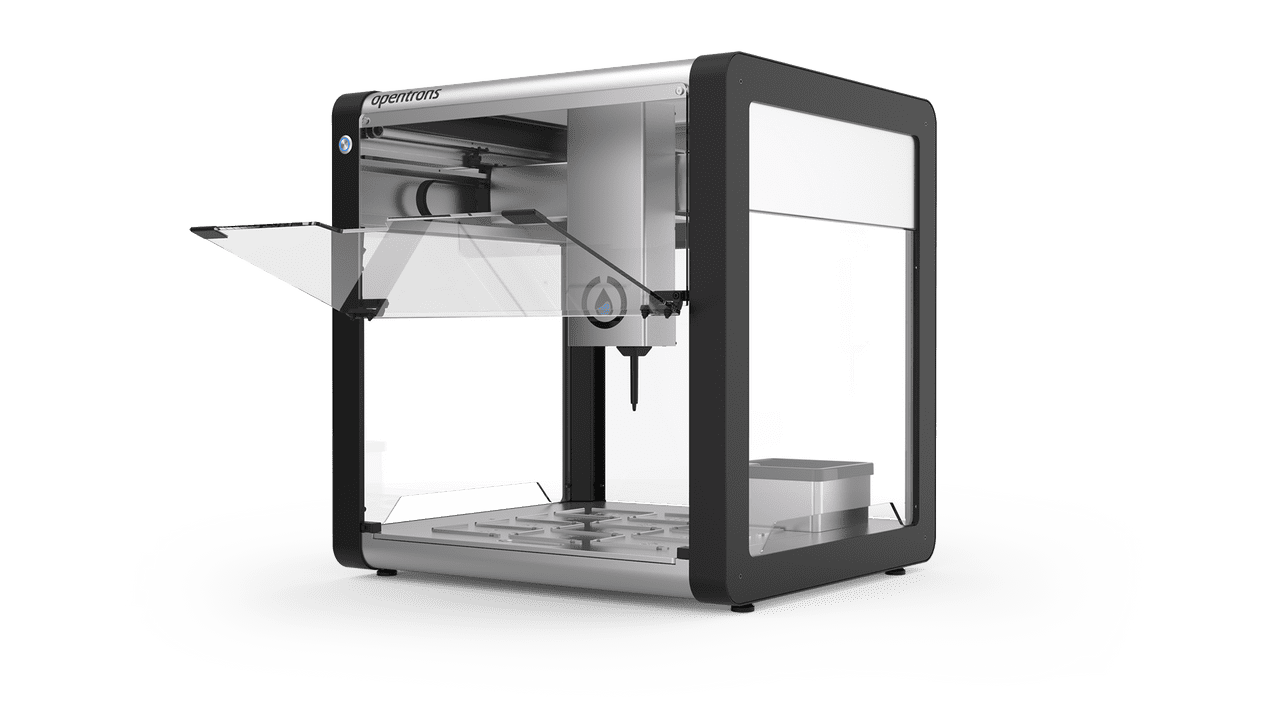
The startup launched with financial backing from HAXLR8TR, a hardware accelerator. In late 2014, they successfully funded a Kickstarter campaign for their first product, the OT-1. This liquid handling robot marked the first commercial open-source liquid handling robot in the life science industry, designed to automate the manipulation of small liquid volumes for biochemical reactions.
After their Kickstarter success, Opentrons showcased their robot's ability to insert DNA into E. coli, demonstrating an early breakthrough in making biotech accessible. Jonathan Brennan-Badal, a Genspace board member, joined Opentrons in 2014 and now serves as CEO.
Challenges along the way
A significant challenge for Opentrons has been navigating the balance between its original open-source ethos and commercial product development. While their initial OT-1 robot adhered to open hardware standards, subsequent products like the OT-2 transitioned to proprietary hardware, maintaining only open-source software. This shift has drawn questions regarding its compliance with open hardware standards, indicating a tension between the benefits of open collaboration and the requirements of commercial scalability and intellectual property.
Major milestones
- 2014Opentrons is officially launched and secures funding from HAXLR8TR, followed by a successful Kickstarter campaign.
- 2014United States PatentFig. 36Open-source liquid-handling filingsAssignee searchRead filing ↗
- 2015The OT-1, the first commercial open-source liquid handling robot in life science, is released for $2,000.
- 2016Opentrons participates in Y Combinator's Winter startup cohort.
- 2018The OT-2 robot is released, later leveraged in COVID-19 research.
- 2020Opentrons helps establish the Pandemic Response Lab (PRL) to speed up COVID-19 testing.
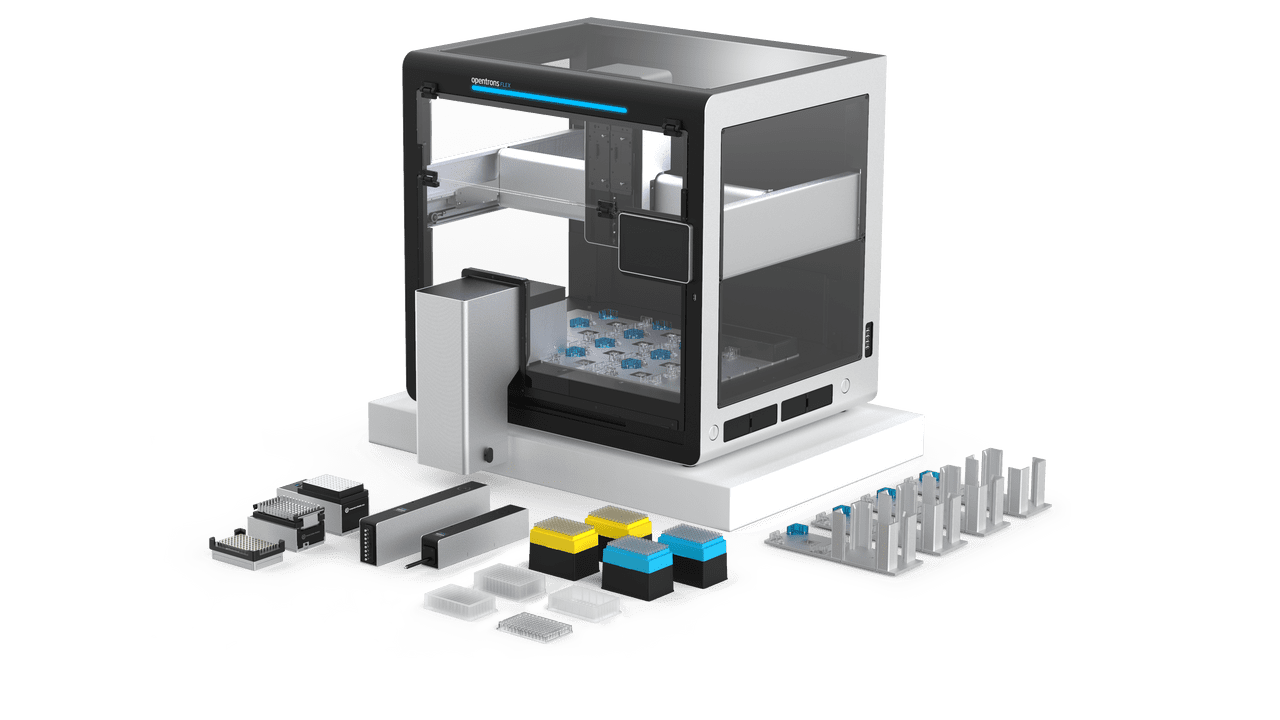
- 2023The Flex robot, successor to the OT-2, is released.
- 2024Opentrons introduces Flex Prep, a no-code robot for pipetting tasks.
Prototypes & people

Currently stocked