Groq
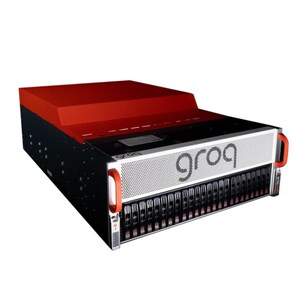
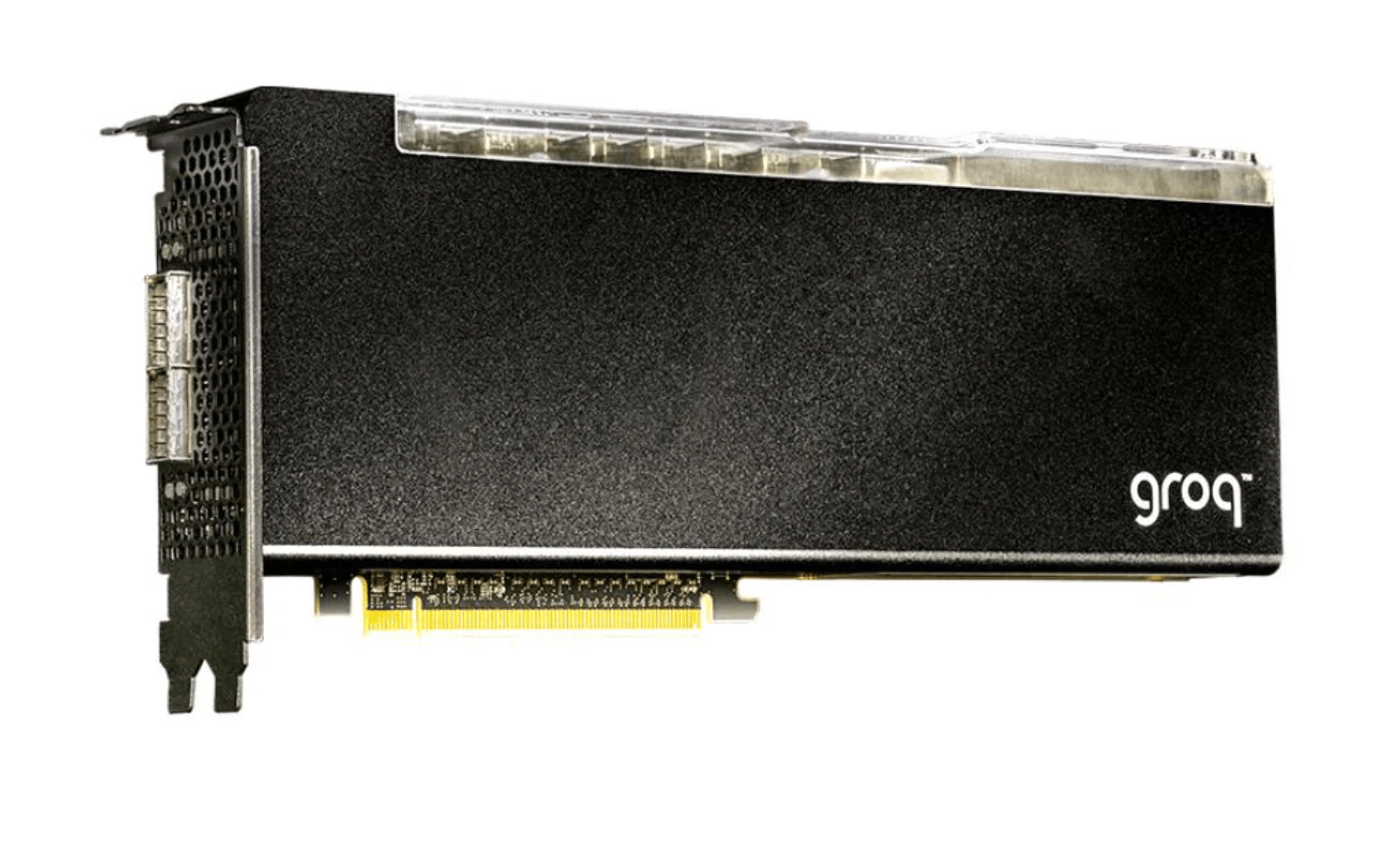
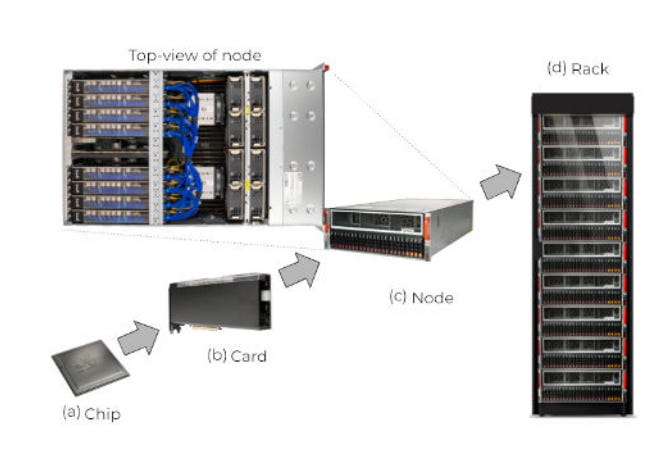
"LPU inference engines."

The story
Groq was founded in 2016 by a group of former Google engineers, primarily Jonathan Ross, who was a lead designer of Google's Tensor Processing Unit (TPU). He was joined by entrepreneur Douglas Wightman, Groq's first CEO. Their motivation was to create a specialized AI accelerator, initially known as the Tensor Streaming Processor (TSP), to tackle the increasing demands of AI workloads.
The company received initial seed funding from Social Capital in 2017 with a $10 million investment, quickly followed by additional funding. This early support allowed them to develop their core technology, focusing on a unique architecture that could efficiently handle AI inference tasks. Their breakthrough lay in designing a deterministic processor that could achieve high performance and energy efficiency by meticulously controlling hardware components.
Groq's first product, the TSP, was a 14nm chip with a computational density of over 1 TeraOp/s per square mm. After the rise of large language models like ChatGPT, they rebranded their core architecture to the Language Processing Unit (LPU) to better reflect its primary application. This strategic pivot positioned Groq to address the burgeoning market for LLM acceleration.
Challenges along the way
One significant challenge for Groq has been competing in the highly competitive AI chip market dominated by giants like Nvidia. While their technology offers impressive speed for AI inference, gaining market share and proving scalability against established players required substantial funding and strategic partnerships. The company rapidly raised significant capital, including becoming a "unicorn" after a Series C round in 2021 and a $640 million Series D in 2024, demonstrating continuous effort to fuel its growth and expand its infrastructure in the global AI landscape.
Major milestones
- 2016Groq was founded by former Google engineers, led by Jonathan Ross and Douglas Wightman.
- 2016United States PatentFig. 32Deterministic tensor-streaming processor filingsAssignee searchRead filing ↗
- 2017Received initial seed funding of $10 million from Social Capital.
- 2021Raised $300 million in a Series C round, valuing Groq at over $1 billion and making it a unicorn.
- 2022Acquired Maxeler Technologies to enhance its dataflow systems expertise.
- 2023Selected Samsung to manufacture its next-generation 4nm LPUs, marking Samsung's first order at their Taylor, Texas fab.
- 2024Launched GroqCloud™ developer platform and acquired Definitive Intelligence.
- 2024Raised $640 million in a Series D round, valuing the company at $2.8 billion.
- 2025Secured a $1.5 billion commitment from Saudi Arabia for LPU-based AI inference infrastructure.
Prototypes & people