Cerebras
"Wafer-scale AI compute."

The story
Cerebras Systems was founded in 2015 by a team of five individuals who previously worked together at SeaMicro, an enterprise started by Andrew Feldman and Gary Lauterbach. Their vision for Cerebras stemmed from a recognition that conventional GPUs were not ideal for high-level processing in artificial intelligence. They set out to create a fundamentally new type of semiconductor, one large enough to take up an entire silicon wafer and use wafer-scale integration to significantly reduce latency and interconnect bottlenecks.
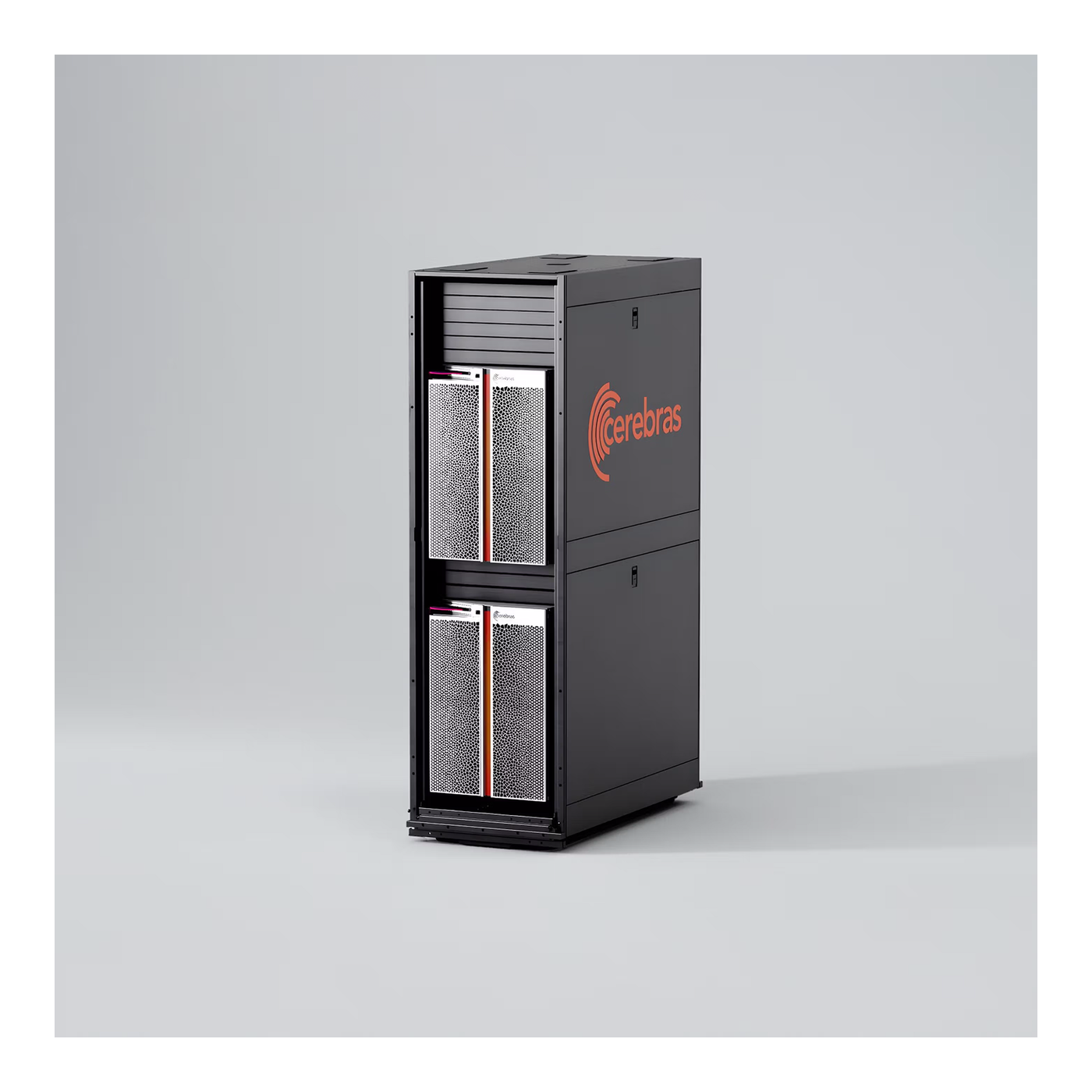
Their initial endeavor led to the development of unique cooling methods, sophisticated software to handle microscopic manufacturing defects, and a specialized machine to precisely drill thousands of screws into wafers. After years of development and substantial investment, facing the formidable challenge of integrated circuit packaging, they successfully produced their first working product in July 2019. This breakthrough resulted in the announcement of WSE-1, their first-generation Wafer-Scale Engine, and the CS-1 supercomputing system in August 2019, marking their entry into the AI hardware market.
Early adoption of Cerebras technology came from educational institutions and life-sciences companies, who utilized the supercomputers for critical research in areas like drug discovery, computational fluid dynamics, genomics, and COVID-19 research. This initial success validated their audacious approach to tackling the immense computational demands of artificial intelligence.
Challenges along the way
Cerebras faced significant technical and financial hurdles in its early days, particularly in solving the complex problem of integrated circuit packaging. This involved crucial elements like adhering silicon to motherboards, managing immense power delivery, and devising efficient heating and cooling solutions, alongside the infrastructure for data transmission. The company reportedly burned through $8 million per month and expended $200 million in trial and error before achieving a functional product. This period of intense expenditure and persistent technical obstacles almost led to the company's collapse, highlighting the high-stakes nature of their innovative endeavor.
Major milestones
- 2015Cerebras Systems was founded by the team of five former SeaMicro executives.
- 2015United States PatentFig. 31Wafer-scale integration filingsAssignee searchRead filing ↗
- 2019Announced WSE-1, its first-generation Wafer-Scale Engine (WSE) semiconductors & CS-1 supercomputing system.
- 2021Released its CS-2 system, based on the WSE-2 with significantly more cores and transistors.
- 2022Set a record for the largest AI models ever trained on one device—a single CS-2 system.
- 2022Unveiled the Andromeda supercomputer, combining 16 WSE-2 chips into one cluster.
- 2024Introduced Wafer Scale Engine (WSE-3) architecture, a 5nm-based chip, and the CS-3 system.
- 2025Mayo Clinic announced collaboration to combine genomic data with de-identified patient records.
- 2026Signed a deal with OpenAI to deliver 750 megawatts of computing power for $10 billion.
Prototypes & people